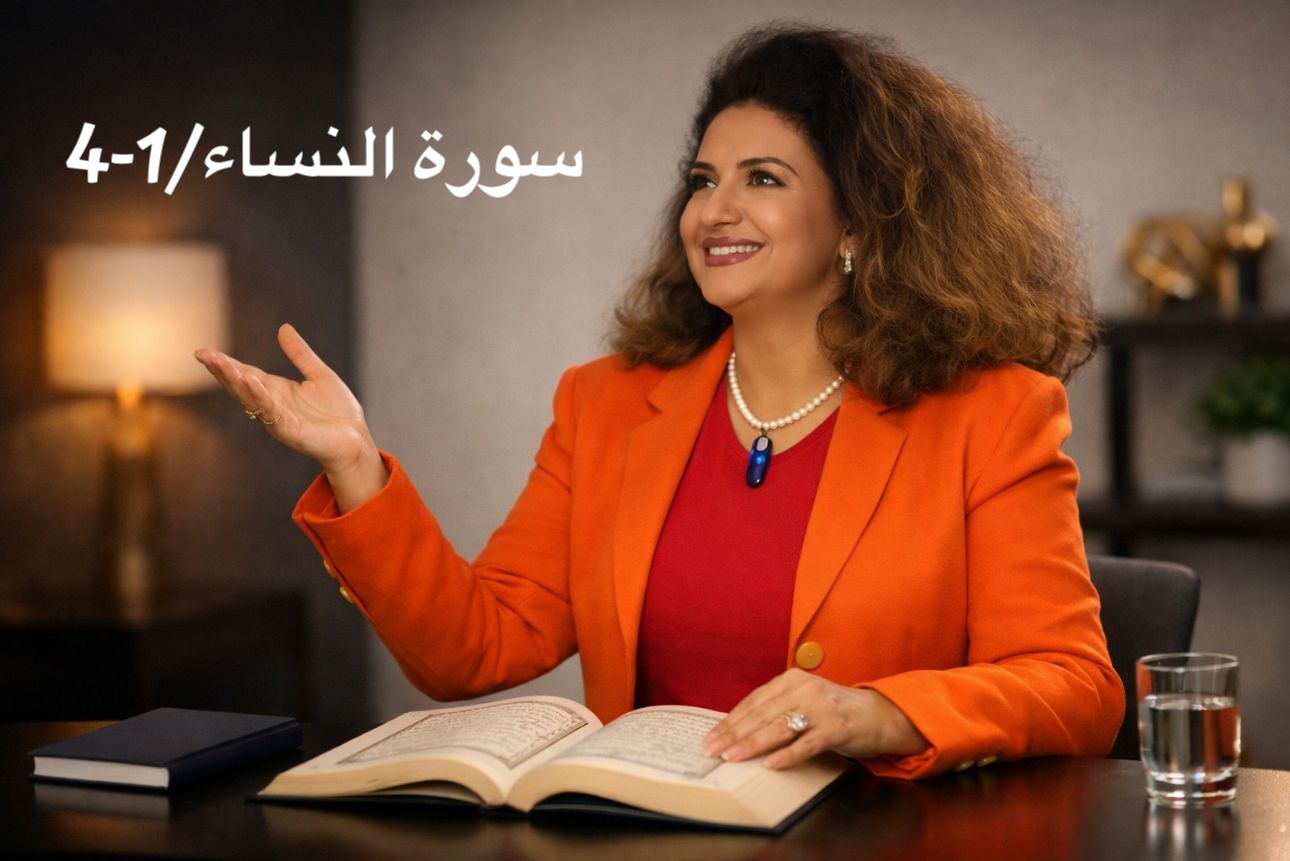
The Explanation of God’s saying in Quran: “If you fear that you cannot deal justly with the orphans, then marry those women who seem good to you: two, three, or four(..)” Surah Al-Nisa/3: This video is part of a civilizational and developmental project based on reading the Qur’an and the divine scriptures from a new scientific perspective grounded in the latest developments in cognitive linguistic sciences. It presents the key concepts found in the first four verses of Surat An-Nisa’: the concept of piety (taqwā), the single self, marriage, orphans, wealth, fairness toward orphans, matrimony, justice regarding women, what the right hand possesses, polygyny, and women’s dowries. Understanding the Qur’an from a scientific perspective offers you a life-changing experience because it deepens your sense of belonging to humanity, strengthens your belief in your purpose of existence, encourages critical thinking, and transforms the way you see yourself, creation, and your role in life. Surah An-Nisā’ 4:3 was interpreted by major scholars like Ibn Kathir, Al-Tabari, and Al-Qurtubi as a verse primarily aimed at protecting orphan girls from injustice and secondarily regulating polygyny by limiting it to four wives and requiring strict, enforceable justice between them. They emphasized that if a man fears he cannot maintain fairness, the Qur’an commands him to marry only one, making monogamy the safer default. This verse became a foundation of Muslim family law, influencing Islamic legislation by establishing limits on multiple marriages, ensuring women’s financial and emotional rights, and preventing exploitation of orphans—principles that continue to shape modern Muslim legal systems. The interpretation provided by Dr. Afaf Mougou derives its originality from two essential factors: first, it places verse 3 of Surah An-Nisa within its proper context alongside the preceding and following verses of the same chapter; second, it is a spiritual interpretation that does not rely on the “reasons for revelation,” which confine the Qur’anic text to limited historical circumstances. Instead, it is based on the spiritual symbols and meanings that the Qur’an was revealed to convey to all people, making it a spiritually developmental book suitable for all times and places: “And thus We have revealed to you a spirit of Our command. You knew neither the Scripture nor faith, but We made it a light by which We guide whom We will of Our servants. And indeed, you surely guide to a straight path.” [Ash-Shūrā: 52] The spiritual interpretation of the Qur’an is important because it uncovers the inner, timeless meanings of the scripture—meanings that nurture the heart, refine character, and deepen one’s connection with God. Unlike interpretations limited by historical context, it highlights the universal guidance of the Qur’an and its role in personal transformation. By focusing on intentions, moral depth, and spiritual symbolism, the new scientific interpretation that you find in this video, complements classical tafsir and helps believers experience the Qur’an as a living source of light, healing, and guidance for every time and place. This video is part of a whole project in digitizing the Religions through personal and business development based on religious values. This project presents a new perspective in understanding the Qur’an through cognitive sciences lens, which is a life-changing experience; it deepens one’s sense of awe, unifies faith with modern knowledge, and encourages critical thinking. By discovering God’s Laws in the universe and the secrets of success in Holy Books, a person gains a stronger sense of purpose, emotional clarity, and harmony between spiritual beliefs and the physical world. This integrated perspective can transform how someone views themselves, creation, and their role in life. Keywords: Qur’an, Qur’anic interpretation, understanding the Qur’an, Surat An-Nisa’, polygyny, marriage, one self, self, piety (taqwā), women’s dowries, fairness toward orphans, kinship ties, matrimony, what the right hand possesses, justice regarding women, personal development, business development, religious values, trade, wealth.
Explanation of Surah Al-Nisa/1-4
The Explanation of God’s saying in Quran: “If you fear that you cannot deal justly with the orphans, then marry those women who seem good to you: two, three, or four(..)” Surah Al-Nisa/3: This video is part of a civilizational and developmental project based on reading the Qur’an and the divine scriptures from a new scientific perspective grounded in the latest developments in cognitive linguistic sciences. It presents the key concepts found in the first four verses of Surat An-Nisa’: the concept of piety (taqwā), the single self, marriage, orphans, wealth, fairness toward orphans, matrimony, justice regarding women, what the right hand possesses, polygyny, and women’s dowries. Understanding the Qur’an from a scientific perspective offers you a life-changing experience because it deepens your sense of belonging to humanity, strengthens your belief in your purpose of existence, encourages critical thinking, and transforms the way you see yourself, creation, and your role in life.
177.000 $
Only logged in customers who have purchased this product may leave a review.


Reviews
There are no reviews yet.